Showing posts with label Healthy. Show all posts

Jul 23, 2014

Ramos Fizz Cheesecake- Light, Fluffy, Delicious!

Light, delicate, healthy cheesecake from Puritan Therapy
Ramos Fizz Cheesecake. Light, fluffy, and delicious!
There are very few foods that I am obsessive about.  I shrug at the Chicago vs. New York pizza debates, I stay neutral on Kansas City vs North Carolina for barbecue, and I think lots of places have great hot dogs.  One of the few things that I am adamant about is cheesecake.  When I was a kid, my sister and I weren't allowed to have sugar.  Part of the thinking at the time was that prohibiting sugar in a kid's diet would prevent diabetes later in life.  In actuality it tends to just promote secretive binging, but that's another story.  Thus, to have a low sugar option for a birthday cake, we would get cheesecake.  It was light and fluffy and we would usually have it with some fresh fruit and a little homemade whipped cream.

The first time I had a cheesecake that was not the one my mom made was when I was in college.  I don't remember where it was, but I do remember being excited for cheesecake.  What I got was a super dense brick on a crumbly graham cracker crust. This was more like eating a cold, over-sweetened paste than what I was expecting.  Even worse, everyone else seemed to think that it was great!  I later learned about New York style cheesecake, and that what I had was actually a good version of it.  I just can't approve.  In my opinion, cheesecake should be light and fluffy.  It should almost be like eating a cheesy cloud.

So, if you are the type of person who prefers their cheesecake more akin to a brick, I may think you're wrong, but I won't judge.  But if this is the case, this is not the recipe that you would want.  The cocktail will still be good, but it will not be your style of cheesecake.

Ramos Gin Fizz

Puritan Therapy- Ramos Fizz Cheesecake
The handle of the spoon is a straw!
As I've mentioned before, I have great respect for a good bartender, especially for their palate.  Which is why I will use my bartender friends as taste testers and flavor advisers whenever I can.  The first time I ever had a Ramos fizz was around the same time that I started really experimenting with chocolates.  I had brought a variety of things to work for a potluck, and then brought all the extras to the bar with me after work.  When Will asked me what I wanted to drink, I handed him a s'more chocolate (small piece of graham cracker with a toasted marshmallow on it dipped in milk chocolate) and told him to make me something to go with that.  He ate it, thought for a moment, and then spent the next 10 minutes crafting this absolutely beautiful drink.  When he put it down, he said that he was playing off of the ideas of milk and cookies.  When I tried it, I was amazed.  It was light, fizzy, creamy, with citrus and a touch of orange.  And it came in a tall glass with a straw spoon, kind of like what you'd get with a slurpee, but fancy and metal.

I have since learned that this is one of those drinks where:
  1. Never order it on a busy night.  It takes a long time and a lot of effort to make.  This can be fine, as long as you understand this and will tip accordingly.
  2. Once you do order it, and the bartender puts it down, multiple people will all ooh and ah, and then they will all want one because it's pretty.  This is the nail in the coffin for the bartender cursing your name under their breath.
Considering that I was just talking about cheesecake, skipping to a cocktail may seem like a nonsequitor.  but look at the recipe, and think about the ingredients for a moment.

    Ramos Gin Fizz

    2 ounces gin (I recommend a french gin that is more subtle and floral than one that has a strong juniper flavor)
    1 ounce heavy cream
    1 egg white
    1/2 ounce lemon juice
    1/2 ounce lime juice
    2 teaspoons superfine sugar
    2 to 3 drops orange flower water
    Soda water
    optional: Orange peel for garnish
Combine gin, cream, the white of the egg, lemon juice, lime juice, sugar, and ice in a cocktail shaker.  Shake for 1 minute, or until the mixture starts to foam (as a note, this is a long time to shake a cocktail, and the minute timer is a minimum).  Strain into a highball glass, and top off with soda water.  The oil from the orange peel adds an extra little pop of orange.

So where is the connection with cheesecake?  The Ramos fizz has dairy, eggs, sugar, and flavorings.  A cheesecake is made with dairy, eggs, sugar, cornstarch, and flavorings.  When I considered the way to make this cocktail into a form of candy, the parallel seemed obvious.

Cheesecake

There are several things I love about this recipe.  To be honest, it's actually a very healthy cheesecake.  It's high in protein, and low in sugar, and all of the perishable ingredients can be pre-measured for you.  In the US, a standard block of cream cheese is 8 ounces.  A small container of cottage cheese is 2 cups.  I never need to worry about using up that little extra bit of, well, anything.   With the idea of low sugar, and high protein, some people (including me on occasion) want to take it a step further and get the trifecta of low fat as well, by using low or nonfat cream cheese and cottage cheese.  IF you choose to make a basic cheesecake instead of the Ramos Fizz cheesecake, substitute away.  The end result will be a firmer cake, but still definitely tasty.  If you are making the Ramos Fizz cake, I recommend against it, and this is why.

*Science Warning*
It is a matter of acid.  If you remember pH from high school chemistry class, there is a range from acid to base.  Cakes (flour or flourless) need an acidic batter to set up or they will end up just being a pudding.  The more acidic the cake, the faster it will set up (but the drier it will be).  If you use low or non fat cheese in your cheesecake, you are making the batter more acidic.  Thus, if you decide that the cake seems too mushy, this is an easy way to adjust it to your liking.  The Ramos Fizz cheesecake is actively adding more acid and drying agents.  Lemon juice, lime juice, and gin all have a drying effect on the cake.  If you make that even more acidic, by removing more of the fat, the result will be an almost chewy cheesecake, which is not what we want at all.
*Science End*

A quick word about equipment. For a long time, equipment tended to be the barrier for me trying to make this.  My mom always used the blender, the hand mixer, and a springform pan.  These days I will usually still use a springform pan, but instead of using multiple appliances, I will just use two attachments on my stick blender.  It takes up less space, and there's less to wash at the end.  Other than that, the only potential challenge is cleanly separating eggs to create a foam.

Ramos Fizz Cheesecake

    6-8 large eggs
    8 ounces cream cheese at room temperature
    2 cups cottage cheese
    1/2 cup sugar
    3 Tbsp cornstarch

Flavoring
    1 tsp gin
    1/2 tsp lime juice
    1/2 tsp lemon juice
    1/4 tsp orange flower water

  1. Preaheat oven to 300 degrees F.  
  2. Separate enough eggs to make 1/2 cup of egg yolks.  
  3. Combine the egg yolks and cottage cheese, blending until smooth.  
  4. Add the cream cheese, corn starch, and sugar.  Continue to blend until smooth.  
  5. Mix in the flavorings.  
  6. Whip the egg whites to stiff peaks.
  7. Fold the egg whites into the yolk mixture gently.
  8. Pour the batter into an ungreased springform pan, and bake in the center of the oven for 1 hour.  When one hour has passed, turn off the oven without opening the oven door and allow to cool in the oven for 1 hour.
  9. Allow to cool to room temperature, and then chill in the refrigerator.
Tips and Recommendations
  • Use a 3 bowl method of separating the eggs.  One for the egg whites, one for the yolks, and one for the egg that you are currently separating.  That way, if a yolk breaks, you only lose one egg, instead of the whole batch.
  • For easier separating, use eggs that are as fresh as possible.  As eggs age, the whites get thicker, and the yolk gets more delicate.  The most recent time I made cheesecake I used some of my farm fresh eggs, and was amazed at how easy it was to separate them.
  • All of the leavening in this recipe comes from the foam created by the egg whites.  That is the most important step.  If you overwhip the egg whites, the foam will collapse, and you will have a puddle in the bottom of the bowl.  This will affect the texture of your final cake.  Beat the egg whites just until the point of stiff peaks.  This means that, if you remove the beater from the egg whites and turn it upside down, the egg foam will stay pointy.
  • Ensure that the bowl that you use for the egg whites is completely clean of fat.  Even if there is a tiny residual drop of dish soap, the egg whites will not create a foam.
  • If using 4 smaller pans instead of a 10 inch pan, cooking time is reduced to 15 minutes, and then the cakes can rest in the oven for 30 minutes.  I have not found an ideal cooking time for cupcake sized cheesecakes at this point.
  • For a basic flavor for cheesecake, you can use 1 tsp vanilla extract and 1 tsp almond extract instead of the Ramos Fizz flavorings
  • If you do not have a springform pan: It is still possible to have a successful cake with a normal 10 inch round cake pan.  However, as the cake pan needs to be ungreased, line the bottom of the pan with parchment paper (the cake needs to be able to cling to the sides of the pan to help rise).  When taking the cake out of the pan, insert a knife at the edge of the cake and run it all around the edge to separate it from the wall of the pan, and then gently turn out onto a plate.  It's trickier, but can still work. Just remember that it is a very delicate cake, and while it would still taste the same when broken, it would still be sad.

Final Analysis

Financial Outlay: The ingredients aren't very expensive.  It is even possible to make this without special equipment, although I personally would not choose to foam egg whites by hand.  It is much easier with a springform pan, but I've made it work in the past without one.  It is just trickier.

Time: For a full sized cheesecake, it will be in the oven for 2 hours.  So it does take longer than a normal "floured" cake.  The prep, however, doesn't take much more time than making a cake out of a box.  It's not a last minute cake, but it's also a cheesecake, so there is no time spent frosting it either.

Quality: The quality is amazing.  Of course, I may be biased.  People will be amazed if you tell them there is only 1/2 cup of sugar in the entire cake.  The quote from a bartender friend of mine after I gave her a mini cheesecake was "Wow, it's like you make pot brownies, but with cocktails!"  As a note, with only a teaspoon of gin in an entire 10 inch cake, there is no way for anyone to get drunk off the cake.

Fun: I find a certain satisfaction in properly dealing with the egg whites.  From getting the eggs separated without breaking yolks, to the brief moment of fear (every single time) that the egg whites won't foam, to getting the whites whipped to just the right consistency.  Then, of course, is the best part.  Eating a cheesecake that doesn't make you feel like you ate a brick, plus is less than half the calories of a Cheesecake Factory cheesecake.

Nov 15, 2013

Squash-ing Misconceptions

A bit of a caveat: In the act of coming down off of Halloween, and building up to Thanksgiving, I admit I've been running into a certain level of writer's block on what to post. I have several projects in progress, but nothing at any level of completion. I feel obligated to use the season to be topical, and nothing was really working for me.

I think the role of marketing, distilled down to one sentence (other than buy this!), is: “Make hard things look easy, and make easy things look hard.” One of the reasons that I tend to try to do just about everything once is so that I can judge for myself. Croissants, for example, are exactly as much work as one would expect – a fair amount. Pie crusts, however, with a little bit of science knowledge, are really easy. Sometimes the improved quality that results from making something from scratch far outweighs the time sink, like most of the candy I've made. On the other hand, sometimes the experience can be summed up as a a check box of "Ok, I've done it. Let's not do that again.”


Which leads us to soup.

In a completely unscientific judgment, I would say that after cereal, chips, and pasta, soup tends to take up the most aisle space for a specific food item in the supermarket. Sometimes it gets its own aisle, which for a food is basically winning. And honestly, soup can often be super easy and super cheap to make. It can take time, sure. But there's also a big difference between something that requires a great deal of effort or constant attention, and something that just needs a while to cook.

If you make your own stock, it will take some time. This is reason number x why I love my crock pot. I can throw in bones, cover with water, and let the crock pot leech all the lovely collagen out of the bones while I'm at work. Which really, is the difference between broth and stock. Stock is thick and rich, and permeated with gelatin. Broth, if we're being completely honest, is just "chicken water". When I get home, voila! Chicken stock that I can later freeze in ice cube trays and use for various purposes. Of course, I am not going to judge you for buying stock. Depending on the soup you make, it may make no difference whatsoever. And if a can or box of chicken stock is the deciding point between ordering a pizza or making soup? Buy the stock.

Despite my obsessive experimentation with zucchini earlier this year, I don't tend to cook with squash all that often. It's just not something that tends to fit into my repertoire. But that was one of the positives of having a CSA this year. It forced me to cook with ingredients that I wouldn't normally use, and try things that I wouldn't normally eat. So I looked around this weekend, and noticed that I still had a bunch of squash left over from the CSA. Conveniently, they're squash, and could be called "nature's canned goods". They will last a really long time, if they haven't been cut open.

I preheated the oven to 350 degrees Fahrenheit, and grabbed whatever squash that I had. I think there were two delicata, one kabocha, a sugar pumpkin that I had not actually carved for Halloween, and a butternut squash (as I said, I had a BUNCH of squash). So I grabbed a roasting pan, sliced the smaller squash in half, the medium sized ones into quarters, and the pumpkin into chunks large enough to fit into pans without being unwieldy. I tossed the seeds (although toasted pumpkin seeds are both easy to make and super tasty), threw the pieces into two pans (as there was way too much for just one), sprinkled a little brown sugar over the top, threw in a couple cloves of garlic, and stuck them in the oven for somewhere around an hour while I did other things around the house. Does it sound like this was done somewhat haphazardly with little attention to detail? Good. Because that's exactly what it was. Periodically, I would check the progress, by sticking a fork in the various pieces. When everything was nice and soft, I took the pans out of the oven and let them cool on top of the stove for a bit.

Once they are were cool enough to handle, I took my ice cream scoop and each piece of squash, and just scooped it out of the skin. I figured that it would be a whole lot easier to do it this way than to carefully peel each one (which it was!). I put the meat of the squash into a large saucepan, and added some chicken stock. At this point I used my immersion blender, but you could also use a potato masher or even a wooden spoon to mix it up, and break down clumps. A little bit of salt and pumpkin pie spice (I thought the combination of cinnamon, nutmeg and ginger worked rather well), and a little heat from the stove, and I had a large pot of creamy, homemade squash soup. It's not rocket science, and honestly, not even that much food science. But it was easy, tasty, and (before adding the spices) could be used for many different types of soup. Curried soup? Sure. Want to add cream or even sour cream to thicken it up a bit? Why not? It may be a bit slow, but it is easy.

Also, when was the last time a can of soup made your entire house smell amazing? I'm guessing never. Roast some squash for a while and you'll be able to skip the air freshener.

Aug 8, 2013

How Healthy are Things Cooked in a Microwave? (Also, a Super Quick way to Husk Corn)


The other day during my perusals of the internet, I found a discussion of a super quick way to husk corn.  In an attempt to find out the veracity of the method, I did the thing that you should never do on the internet.  I read the comments section.  As the method includes cooking it in the microwave, there were several people who said that they would never cook corn in the microwave, because it destroys nutrients.  Boiling was much better.  My first reaction was a giant "Seriously? No, just... no". But I have been known to be wrong before.  Therefore, instead of just making assumptions and moving on, I decided to look into it just to make sure.

These days I think most people know how a microwave works.  The waves, similar to radio waves, are pointed at the food in the microwave, and interact with polar molecules.  Polar molecules are ones that have a positive and a negative end, kind of like a battery.  Water is a good example of a polar molecule, and is also found in most of our food.  So the microwaves will make the polar molecules vibrate and heat up, heating up the food.  This is why water will boil in a microwave.  So does this process damage the nutritional value of the food?  Yes, but only to the same extent that adding any form of heat would.  Steaming is often considered the best form of heating, although even then it's not 100% clear.  As I had thought, however, boiling a vegetable will remove more nutrients than microwaving it.  The water will leech some of the nutrients during the boiling process.  Therefore, if the water is thrown away, those nutrients are thrown away with it.

Ok, on the fun part!

When I was a kid, we used to cook corn in the microwave.  It was fast, easy, and tasty.  Not to mention that it got my sister and I out of her hair for a little bit when we were sent outside to husk the corn. But once the corn was husked, it was wrapped in wax paper and thrown into the microwave.  After learning the trick that I'm about to share (I can tell, you're super excited... or just want me to get to the point) the wax paper is just extra waste.

Step 1: Get your ear (or ears) of corn

Step 2: Cook the corn in the microwave for approximately 3 minutes per ear, with the husk on.  I have been told that this works if you cook the ears in the oven as well, but I have not tried it.

Step 3: Cut off the end. Ensure that you have a clean cut.  If the leaves are still attached to the cob, this method will not work.

Step 4: Grab the top of the ear by the leaves/silk. Careful, as the corn will be HOT!
Step 5: Give the corn a solid sharp shake. The corn cob will come out of the husk, clean, and free of silk.

You may want to use a glove or dishtowel for this part.
Nice clean ear!


All the silk left in the husk
Observations: If the corn is not fully cooked through, some of the silk will still stick to the cob.  I like my corn a little crunchy, so this will occasionally happen to me.  I have also found that precooking the corn before putting it on a grill is a good way to get both the caramelization from the grill and have the corn cooked all the way through.

As a final treat:  My favorite corn ever comes from Toro, in Boston.  It's grilled with cotija cheese, aioli, lime and cayenne.  It seems to be, I'm sorry to say, impossible to recreate at home.  However, with my heat gun, I can come somewhat close.  This recipe provides a reasonable combination of ingredients, especially for faking an aioli.  The preparation method, however, is a bit different. Both because I don't have a grill, and the recipe does not include adding a little bit of char to the kernels.

6 tablespoons mayonnaise
1 medium garlic clove, minced
3/4 teaspoon kosher salt
3/4 teaspoon cayenne pepper
3/4 cup crumbled Cotija cheese (about 4 ounces)
6 ears corn, husks on
1 medium lime, cut into 6 wedges


Mix together the mayonnaise, garlic, salt and cayenne in a small bowl.  If you have any concerns about how spicy the corn will turn out, start with less cayenne and then mix to taste.

Microwave the corn, in the husk, until just cooked (you want it to be a little crunchy still, but not raw).

Remove the husk, and cut each ear in half.  Place the corn on a metal sheet pan, and use the heat gun to give the corn a little bit of grilled char.  Sorry, in this case, the broiler on your oven is not enough.  It will only dry out the corn.  The heat gun produces heat of either 750 degrees or 1000 degrees Fahrenheit.

Drizzle the corn with a little bit of the mayo recipe, a little extra cayenne, and a squeeze of lime.

You're welcome.

References:
"Electromagnetic Fields & Public Health: Microwave Ovens." WHO. World Health Organization, n.d. Web. 08 Aug. 2013. <http://www.who.int/peh-emf/publications/facts/info_microwaves/en/>.
"Is Microwave Cooking Healthy?" LIVESTRONG.COM. Live Strong, n.d. Web. 08 Aug. 2013. <http://www.livestrong.com/article/370537-is-microwave-cooking-healthy/>.
"Microwave Cooking and Nutrition." Microwave Cooking and Nutrition. Harvard University, n.d. Web. 08 Aug. 2013. <http://www.health.harvard.edu/fhg/updates/Microwave-cooking-and-nutrition.shtml>.
"Shucking Corn--Clean Ears Everytime." YouTube. YouTube, 25 Sept. 2011. Web. 08 Aug. 2013. <http://www.youtube.com/watch?v=YnBF6bv4Oe4>.

Jul 25, 2013

Sit, Stand, Move, and Everything in Between

More and more research is showing how bad it is to spend a large amount of time sitting in one place. A sedentary lifestyle has been linked to increased risk of cardiovascular disease, obesity, sleep apnea, diabetes,  a big butt (yes, separate from weight gain itself) as well as all of the musculoskeletal issues that it can contribute to (carpal tunnel syndrome, headaches, and back problems just to name a few). And more and more research is showing that just going to the gym doesn't quite cut it.  Our metabolism has had a "power save" mode much longer than our electronic devices.

I have heard some people argue that, as humans, we are not designed to sit at all.  I find this assertion ridiculous. We did not create chairs, and then decide that sitting seemed like a good idea.  What is unnatural is spending eight to twelve hours a day sitting.
Yup, totally unnatural to sit. You would never see sitting behavior in nature.
Many people, reasonably, would think to just opt for a standing desk.  If a person is standing for 8 hours a day, then obviously they would be moving, fidgeting, and being less of a couch potato. There are pluses and minuses to this.  People tend to report interacting with co-workers more, having more energy, and being more ready to get up and go whenever necessary (it might help that they are already up...). Some of the downsides are pretty easy to see: just look at the issues that people who stand all day at a "desk" already have. Poor posture standing can lead to the same issues as if you have poor posture when sitting, aching feet, the stress on the circulatory system contributes to arteriosclerosis and varicose veins. Also, your choice of shoes becomes a lot more important.  Personally, I have a hard time standing in heels for two hours for an event.  A standing desk would mean that they would never be worn to the office.  Of course, some offices are not conducive to setting up a standing desk to begin with (let alone a walking desk).

Unsurprisingly, many studies opt for moderation.  Don't spend too much time sitting, don't spend too much time standing.  Moving, on the other hand, is something that we should do a lot more of. One of the reasons that our ancient ancestors were such successful hunters was that they could injure their prey and just follow it, relentlessly, until it died. So that means that we should spend more time at the gym, trying to tack on a whole lot of extra exercise into an already packed schedule?  Nope. Those hours of being sedentary have already put stress on the muscles, and vigorous workouts can lead to muscle or joint injury. Also, studies demonstrate that an increased amount of aerobic exercise (in professional level athletes) can lead to increased instances of arrhythmia. Conveniently enough, recent studies have started proving the efficiency of a shorter duration, higher intensity workout, making the most of interval training, which means less time spent actively exercising.

On a practical level, what does all of this mean? Consider the metabolism like a computer. Without activity, it will go into power save mode. But even just periodically doing a little work will help keep it going at a higher rate (great for anyone who is also looking to burn some extra calories). To put it in technical terms, the goal is to increase the non-exercise activity thermogenesis, or NEAT, that we do. This is all the energy that we use that isn't sleeping, eating, or exercising. Considering that, in order to prevent OOS maladies (Occupational Overuse Syndrome), we should be taking a break from our computers, crafts, or anything else that has us repeating motions repeatedly at least once an hour to stretch and move, this gives us a plenty of opportunities to increase our NEAT.

I am notoriously bad at paying attention to things around me once I am engrossed in a project.  Because of that, I have set an alarm on my calendar to remind me to stretch.  I've had carpal tunnel syndrome once, and I'd rather keep it from coming back.  Most of the "recommendations" I've seen on other sites for how to increase NEAT included things like use the restroom that is the farthest away from your desk, go out to pick up lunch instead of having it delivered, have walking meetings, and things like that.While I'm sure that these are all good ideas, they just strike me as... unfulfilling (not to mention that I'm not even going to try to convince anyone in my office to have a "walking meeting").

I have, however, figured out how to work more NEAT into my day where I do feel like I'm getting something out of it.  My office building became involved in Climb Corps, which means that the stairways are open. Now, going up stairs sucks.  Even when I was a distance runner, I hated hills. But, with the stairs right there, I can't make excuses about having to get up early to go to the gym, or forgetting to bring my gym bag to work, or anything else (all right, the day that I tripped and fell outside, and had a bloodied knee, I skipped the stairs.  But I think that's fair). Every time I come or go from my office, I go up/down (or a combination of the two) some stairs. I started by taking the stairs down on my way home (12 flights from my office to the lobby).  Then, I added in a few flights every time I went to the rest room.  I'd go down a couple of flights, and then back up. Next, I'd take the elevator in the morning six floors, and walk the rest. Currently I am walking up all 12 flights on my way into work, I do sets of 4 flights 2-3 times a day, and I try to go down all 12 flights and back up just before lunch, and walk down all 12 flights on my way home.  Each time I do this, it takes 1-5 minutes.
See! Less than 5 minutes to go down and back up 12 flights of stairs.

So, what can you do to increase your NEAT?

References (my apologies for not citing in the blog post itself) :
"ACSM's Health & Fitness Journal." HIGH-INTENSITY CIRCUIT TRAINING USING BODY WEIGHT: Maximum R... :. N.p., n.d. Web. 25 July 2013. <http://journals.lww.com/acsm-healthfitness/Fulltext/2013/05000/HIGH_INTENSITY_CIRCUIT_TRAINING_USING_BODY_WEIGHT_.5.aspx>.
"American Physiological SocietyAmerican Journal of Physiology - Cell Physiology." Static Mechanical Stretching Accelerates Lipid Production in 3T3-L1 Adipocytes by Activating the MEK Signaling Pathway. N.p., n.d. Web. 25 July 2013. <http://ajpcell.physiology.org/content/early/2011/10/17/ajpcell.00167.2011.abstract>.
"ClimbCorps - Brigham and Women's Hospital." ClimbCorps - Brigham and Women's Hospital. N.p., n.d. Web. 25 July 2013. <http://giving.brighamandwomens.org/climbcorps>.
"CUergo: Sitting and Standing." CUergo: Sitting and Standing. N.p., n.d. Web. 25 July 2013. <http://ergo.human.cornell.edu/CUESitStand.html>.
"Exercise and Sport Sciences Reviews." Too Much Sitting: The Population Health Science of Sedentary... :. N.p., n.d. Web. 25 July 2013. <http://journals.lww.com/acsm-essr/Abstract/2010/07000/Too_Much_Sitting__The_Population_Health_Science_of.3.aspx>.
"Prolonged TV Viewing Linked to Increased Risk of Type 2 Diabetes, Cardiovascular Disease." Prolonged TV Viewing Linked to Increased Risk of Type 2 Diabetes, Cardiovascular Disease. N.p., n.d. Web. 25 July 2013. <http://www.eurekalert.org/pub_releases/2011-06/hsop-ptv061011.php>.
"Result Filters." National Center for Biotechnology Information. U.S. National Library of Medicine, n.d. Web. 25 July 2013. <http://www.ncbi.nlm.nih.gov/pubmed/12468415>.
"Result Filters." National Center for Biotechnology Information. U.S. National Library of Medicine, n.d. Web. 25 July 2013. <http://www.ncbi.nlm.nih.gov/pubmed/18001322>.
"Result Filters." National Center for Biotechnology Information. U.S. National Library of Medicine, n.d. Web. 25 July 2013. <http://www.ncbi.nlm.nih.gov/pubmed/21330616>.
"SEDENTARY LIFESTYLE." Womenshealthmag.com. N.p., n.d. Web. 25 July 2013. <http://www.womenshealthmag.com/health/sedentary-lifestyle-hazards?fullpage=1>.
"STANDING DESK." Womenshealthmag.com. N.p., n.d. Web. 25 July 2013. <http://www.womenshealthmag.com/health/standing-desk>.
"Television Viewing Time and Reduced Life Expectancy: A Life Table Analysis." -- Veerman Et Al. 46 (13): 927. N.p., n.d. Web. 25 July 2013. <http://bjsm.bmj.com/content/46/13/927.abstract>.

Jul 21, 2013

The Best way to Cook in the Summer? Not in the Kitchen

I don't like cold weather. I can, and have, dealt with it. As a child, I could tell if it was above or below zero degrees Fahrenheit by going outside and inhaling (ah, the tricks of living in northern Maine...), but I am still not a fan. Therefore, I try to not complain about hot weather, and reserve my ire for the cold. But even I have to admit that it has been hot in Boston this week. Hot enough that I've left the air conditioner on for my cats when I went to work. Hot enough that I've been drinking my morning juice in Popsicle form. And hot enough that spending time in the kitchen cooking or baking sounds like an awful plan.

Instead of eating out, going hungry, or living completely off of my CSA veggies (which, at least for this week, are not that conducive for eating raw), I broke out my crock pot. I let it do my cooking for me for the day while I was at work, and provide me with meat that can be eaten cold for the rest of the week. The other reason that I love letting my crock pot cook for me while I'm at work is that as soon as I walk in the door after work, my apartment smells amazing. 

Now, I know some people who balk at the idea of leaving the crock pot on while they are not home. I am, obviously, not one of these people. I see it as an appliance that was built for this sort of a purpose. If you feel at all reticent about leaving your crock pot on while you are not home (or question the likelihood of an electrical fire from the wiring in your home), then don't do it.


One of my favorite recipes to do in the crock pot is a recipe from Ghille Basan's Modern Moroccan. It's chicken tagine with preserved lemons and olives. To quote from the book, "A tagine is a highly flavored stew, usually meat based, cooked slowly over charcoal in a special earthenware dish with a conical lid, which is also called a tagine, designed to let the food cook in its own steam." Conveniently, I have a tagine, which fits on top of my cast iron skillet and also on top of my crock pot. But, especially using the crock pot, it's not a necessity. Also, the crock pot allows me to be lazy in preparation as well. Instead of "crushing" the garlic, "grating" the onion, or "finely chopping" the cilantro, I can just do a rough chop on it all before stuffing it into the cavity of the chicken, or just throwing it all in together...

The one potential downside of making this in the crock pot as opposed to the oven is that it does lose more structural integrity. Of course, as I'm making it while I'm at work, I am cooking it a f more hours than I would otherwise. The pictures below show it just as it starts cooking, and when I get home from work.


A couple of notes on ingredients: 

You don't need saffron.  Its price far outweighs the benefits it brings to this dish. Saffron is THE most expensive spice in the world. Turmeric is just as good in this application, and much more affordable.

Don't just get the cheapest olives you can find. The olives in this dish are one of the fundamental flavors.  If the olives aren't meaty and flavorful, the entire dish will suffer. If the olives are not a good enough flavor that you would eat them on their own, get better olives.

A word on preserved lemons. It is possible to make them yourself, although they won't be ready for about 6 weeks. I have actually found them at whole foods, in the same section as the olives. You don't want to leave them out altogether. That said, I have a confession to make. The first time I tried this in the crock pot, I bought some preserved lemons, and for the olives I used a lemon garlic mix (which included chunks of lemon). It turned out a little too lemony, but the chunks of lemon that were in with the olives were rather tasty. So the next time I did it, I only used the lemon garlic olives, and skipped the preserved lemons altogether. This is how I've been doing it ever since. So if you can't find preserved lemons where you are, don't fret.

For the first night I just put it over some couscous. After that (as the meat just falls apart), it is good hot or cold, and it can be great in a sandwich, on a salad, on its own... 

Jul 16, 2013

CSA Greens

This year, for the first time, I'm doing a CSA. For those of you who aren't urban hipster types, CSA stands for Community Supported Agriculture. I opted to join Silverbrook Farms, because not only do they provide a half share, but I can pick it up in Copley Square, which is a 10 minute walk from my office.  For those of you who have no experience with a CSA and are too lazy to click on links, it's almost like a produce based Christmas. At the beginning of the growing season, I paid for my "share".  Therefore, during the summer, every week I get a box with fruits, veggies, flowers, cheese, eggs, or whatever the farm has produced.  My half share provides me with enough veggies for the week, with a few extra perks. It may be more expensive than shopping at a grocery store, but I'm supporting local small business, everything is super fresh, and it forces me to try things that I may not have even thought to otherwise. Trying new things? Yeah, you can see why I get excited about this.

I never ate much in the way of "greens" growing up, with the exception of the occasional dandelion greens or fiddle-heads that my friend's family would gather.  I've always been much more familiar with the peas, beans, lettuce, brussels sprouts, broccoli side of the spectrum.  So the fact that I've had kale, mustard greens, chard, chinese cabbage, kohlrabi, pea tendrils, and "saute greens" in my CSA share are all kind exciting, as they've been new to me.

Pea Tendrils
Thank you google image  for giving me a link to a picture of pea tendrils. The original site this came from was http://veganyumyum.com/2007/05/pea-tendril-and-daikon-noodle-salad/ which, amusingly enough, also seems to be from Boston.

These are the tips of the pea plant.  They taste like peapods, and can be eaten in a lot of different ways. The second week of my CSA I put them into a salad with some lettuce, spring onions, fresh strawberries, and Hannah Bells cheese.  All the ingredients came from that week's CSA, except for the blueberry balsamic vinegar and olive oil I used to dress it. It was an absolutely amazing salad.  They're super tasty when sauteed, and worked equally well in a risotto with chicken, sage, mushrooms, onion, garlic, and Parmesan cheese.

Greens

I may be sticking my foot in my mouth here, but I'm going to lump kale, chard, and the mixed "saute greens" all together. I'm sure that, with more exposure, I will come to learn that this is blasphemous, and that they should all be appreciated on their own merits.  But for now, I will admit to being a greens racist.  They all look alike to me.

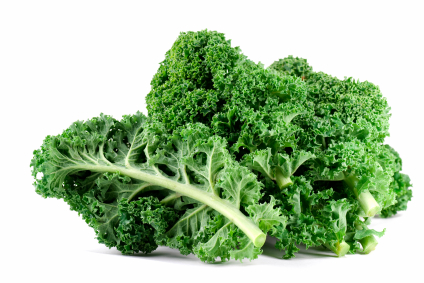
For anyone who has had the same exposure to greens that I did up until a few weeks ago, there's no reason to be skeptical towards something that looks like a kind of lettuce that you have to cook.  My first attempt at making kale was this recipe from the Food Network site.  The one change that I made, though, was to add bacon, and use that grease instead of the olive oil. It was fast, easy, and super tasty.  I've done the same thing with some of the mustard greens that I've received as well.

Cabbage and Radish and Slaw, Oh My!
The week that I got the kohlrabi and the chinese cabbage (along with some other greens of whose genealogy I was unaware) I was fairly busy, and not home a good chunk of the week.  Wanting to make sure that nothing was wasted, I thought of doing a slaw as a way of preserving things for a little longer.

Whenever possible, I like to try to give links to where my ideas come from.  I figure that it is only fair.  In this case, I have to admit that I have no idea where to find the recipe for the dressing that I used.  I've looked.  It included mayonnaise, rice wine vinegar, sesame oil (including a little chili sesame oil), ginger, and probably a few other things.  For the veggies, I took all of the less delicate greens (mustard greens, chinese cabbage, anything that wasn't lettuce or pea tendrils essentially), washed them thoroughly,  and tore them into reasonably small pieces.  

Tear?  Why didn't I just use a knife, or a mandolin, or one of they many other cutting implements that I have in my kitchen? Because I wasn't going to be eating it right away. Some say that when you cut lettuce with a knife, the metal in the knife will react with the lettuce, causing it to brown. This is not true.  This episode of Good Eats goes into it in detail.  Think of lettuce like a piece of bubble wrap.  If you cut the bubble wrap with scissors, then any bubbles in the way will get popped.  If you tear it, the tear will often follow the path of least resistance, and rip along the thinner plastic where the bubbles are not. In lettuce, the "bubbles" are the cells that have the chemicals that will cause lettuce to brown.  So by tearing it, the pieces are not as evenly sized, but the cells do not get as damaged, and don't brown as fast. Of course, as I was using thicker, more robust greens, they probably could have stood up to a knife without too many ill effects. So, in this case, there probably was no reason to do so, other than the fun of ripping things up with my hands (and to educate you against your will on the cellular mechanics of edible plants) .

I peeled and sliced the kohlrabi, and sliced the spring onions to throw in.  All of the descriptions of kohlrabi I found describe it as being similar to a radish. I find that is not true, but maybe this is because I grew up in broccoli country.  If you ever eat the raw stems of broccoli, the flavor of kohlrabi is kind of like that, but a little crunchier. I tossed it all with the dressing, and then let it sit to let the flavors meld. What I ended up with was slightly spicy, slightly crunchy, and had a much more varied flavor profile than what I had figured.  Because all the greens looked very similar going in, and looked the same in the slaw, I never knew quite what I was going to get with each bite.

Jul 15, 2013

It's too Expensive to Eat Healthy!

Recently I got into one of those discussions that I tend to classify as a "someone is wrong on the internet" discussion. It started from a complaint that eating healthy costs way too much more than eating crap. I hate it when people use that as an excuse to eat poorly.

The first point/question would be what they consider "healthy". If you take as a starting point "Everything must be organic, locally sourced, free range, antibiotic/pesticide free, completely unprocessed, and not genetically modified by Monsanto", You're definitely not going to be able to do that on $3 a day.  If your goal, on the other hand, is to eat foods that recognizably came from a plant or animal, and you're willing to put in a little bit of work, it can definitely be done.

I won't mince words.  For a fair chunk of time growing up, we were poor, and therefore I learned some of what I know based on that.  My parents, for a while, were the king and queen of the raincheck. For a while, I ate more pasta and foods that ended in "Helper" than I care to remember.  I may have had a nervous tick at the thought of a can of tuna for many years after.  There's also a traumatizing event involving spaghetti O's and wheat germ that someday, with therapy, I might be able to talk about. Don't get me wrong, my parents did well with what we had, but past the "required for life" angle, food was not that important.

Once I started living alone (as opposed to having family support me), I had to find my own ways to eat cheaply. During the school year I was spoiled.  Not only did I have a meal plan, but I also worked in the dining hall, which provided me with a lot of access to free food.  On occasion I may have taken the idea of eating free whenever I worked to a bit of an extreme, but no one seemed to mind.  Over the summer was a different story, however.  The first summer I lived on my own finances were exceptionally tight.  I had to pay for rent, utilities, my own food, and save up money for tuition.  That entire summer I spent about $10 a week on groceries.

So here are some of the things that I've learned over the years about eating cheaply, in no particular order.

1. Legumes are your friends: Not only are they high in protein and fiber (high in fiber= you feel full faster and longer) but you can often buy a bag of dried beans for under $1, which will last several meals.  Black beans are really tasty in a lot of things, including salads, salsa, burritos, etc.  With chickpeas you can make your own hummus (SUPER SIMPLE) or falafel.  I recently discovered how tasty great northern beans are, especially in turkey chili.

2. Look for where the immigrants shop: The brightly lit, well arranged markets will have everything you're looking for, sure, but there's a cost for that.  If you're in an urban area, check out the local ethnic supermarkets.  It may not be cheaper, but often it can be.  In Boston, I love Haymarket. It's an open air market that is only on Fridays and Saturdays.  It's not a farmer's market, it's more like an old fashioned bazaar.  This is not a place where the customer is always right; for the most part, you don't even get to pick your own produce.  But when you're getting multiple pounds of fruits and veggies for $1, it can be worth it.  Also, if you're willing to be friendly, and smile at the people working in the stands, they give you better stuff.

3. Know your prices: One of the biggest scams large supermarket chains pull is that they will mark up the price of a product a week or so before putting it on sale.  People are lured in by the sale sign, but they're not actually saving as much as they think they are.  During tight financial times, I would keep a list of the things I'd normally try to have on hand, and what/where the cheapest price is normally.  If what I was looking for was lower than that, it would be a time to buy.  Some people I know swear by Costco or BJ's.  Often times, their prices can be better than local stores.  But before you shell out for a membership, think about how much you personally will save over the course of the year.  Remember that that membership fee will cut into savings.  Also, buying in bulk has its drawbacks.  Know what you're getting, how to store it, and that you will, in fact, use that much.  Otherwise, if you are paying for things that will be thrown out, you're not saving money.

4. Think Traditional: A lot of traditional cuisines developed because they were eating what they had.  Things like quiche, casseroles, and lasagna can be little more than refrigerator velcro.  You have a small amount of meat?  Mix it with more veggies and put it over rice (like most of asia).  Or use herbs/spices to add more flavor to it (spicy food helps make you feel full faster).  Left over rice?  Use it for fried rice, or aranchini before it dries out.

5. Be Flexible:  What's in season? What's on sale?  During tight times I will not pay more than $.99 a pound for meat.  But if there are things that are cheap, don't be afraid to try something new.  You can plan a week's worth of meals around one large cut of meat.  Roast a chicken one night, use it in sandwiches, on a salad, in a burrito, meat pies, a casserole, etc. and when you get to the end of it, you can make stock from the bones.  Cabbage, potatoes, you know, staples, are that for a reason.  They are usually cheap, and plentiful.

6. Plan Ahead: There are some days when you will not want to cook.  We all have them.  With proper planning, you can have instant food on the cheap.  I will often try to make food in bulk and then pack it away, so I can have plenty of things to just grab and go later.  Recently I made a bunch of pizza dough and threw together individual sized calzones.  Used a bag of spinach, 2 red peppers, an onion, a small container of mushrooms, a bag of shredded cheese, 2 tomatoes, and a little pizza sauce.  Because I did several at once, I didn't have to worry about leftover ingredients, and I just stuck them in the freezer.  In the morning on my way to work I can just grab one out of the freezer, and pop it into the toaster oven for lunch.

7. Learn to Love your Freezer: Proper preserving of food makes buying in bulk a reasonable idea.  If you buy a bunch of something because it's super cheap, it becomes more expensive the more that you have to throw out.  Figure out what you use, and portion appropriately.  Often with meat, the less work the butcher has to do, the less you have to pay them for it.  But not only is a pork shoulder unwieldy to try to fit into a small apartment freezer, I know that I would never use the whole thing at once.  I will portion out pieces for what I would usually cook.  This means that I'm not thawing out more than I am planning to use at a time, and minimizing waste.  With a pork loin, I will cut it up into servings, wrap each in plastic wrap, then in tinfoil, and store it in the freezer in a labeled plastic bag.  If you want to learn more about freezing, Alton Brown has an episode of Good Eats on the topic.

8. Learn a Little Science: Food science is kind of an amazing thing, and I would recommend that anyone who likes to cook understand how/why the things that they cook do what they do.  If you understand your food, that's when you can start making useful substitutions.  I recently decided that I don't want to buy brown sugar anymore.  Inevitably it dries out on me (no, I probably don't store it properly, thanks for pointing that out), and on the occasions when I need to use it, I end up smashing the bag against the counter, trying to break it up into small enough chunks to use properly (and yes, I know the different ways that you can do that without the percussive maintenance, but sometimes hitting things is fun).  One afternoon I discovered that I was out, but needed some for a recipe.  Do you know how you can make brown sugar?  Add a tablespoon of molasses to a cup of white sugar and stir.  That's it.  Considering how often I use molasses, I'm not going to run out of it, and can always have fresh brown sugar if and when I need it. And making it in exactly the same way that factories do.

9. It is ALMOST always cheaper to make things yourself: This would go along with knowing a little bit of very basic economics, and being pragmatic about what you will and won't use. Personally I really like understanding what goes into a meal that I will get at a restaurant.  Not just ingredients, but how difficult is it really to make, versus what I'm paying for it? Because sometimes, it really is cheaper to just buy the finished product. Indian food is a wonderful example.  The most expensive hurdle in making a lot of Indian food is the spices.  For a restaurant, buying in bulk, this ends up being fairly cheap, because they also have a lot of turnover, and use those spices constantly.  But unless you are also going to be making those dishes a lot at home, you've just spent a lot of money on things that will most likely just take up space.  Or if you decide to try making your own cheese.  A fair amount of time goes into it, you would pay more for the milk and rennet than a commercial producer, and the product may or may not be better than something you can buy for cheaper at a store.

As with everything, there is always a balance between time, money, and quality.  Personally, I like making things.  Even more, I like making things that I've never made before. So the fact that I am spending more time on something counts as a positive.  Other people are willing to spend more money to be able to spend less time in the kitchen. Also, quality will always weigh into the equation. Generics brands can be great, but there are some things that I have learned that I want a named brand.  If I were to get the generic, it is different enough that I will not enjoy it, and not eat it, and therefore it is a waste of money.  For other things, it may be cheaper and faster to buy, but the quality of making it myself outweighs both of those.  Quality does not always equal flavor, also.  Because I can now afford to, I am getting my vegetables this summer through a CSA (Community Supported Agriculture).  The fact that everything is local, fresh, sometimes novel (I've cooked several things for the first time recently because of it), and I'm supporting small businesses makes me willing to pay a little more for it.

If anyone else has suggestions to add to the list, I'd be happy to hear them. Please note that I really didn't speak to coupons.  I've tried doing things with food coupons periodically over the years, and kept coming back to one big problem.  Most coupons are for brand name, more processed foods than I tend to buy, and therefore spending the time to look through them even is not worth any pittance of a savings that I would receive.